O and P visas offer nonimmigrant opportunities for individuals with extraordinary ability in fields like sciences, arts, education, business, or athletics (O visas), as well as athletes, artists, and performers in recognized groups or culturally unique programs (P visas).
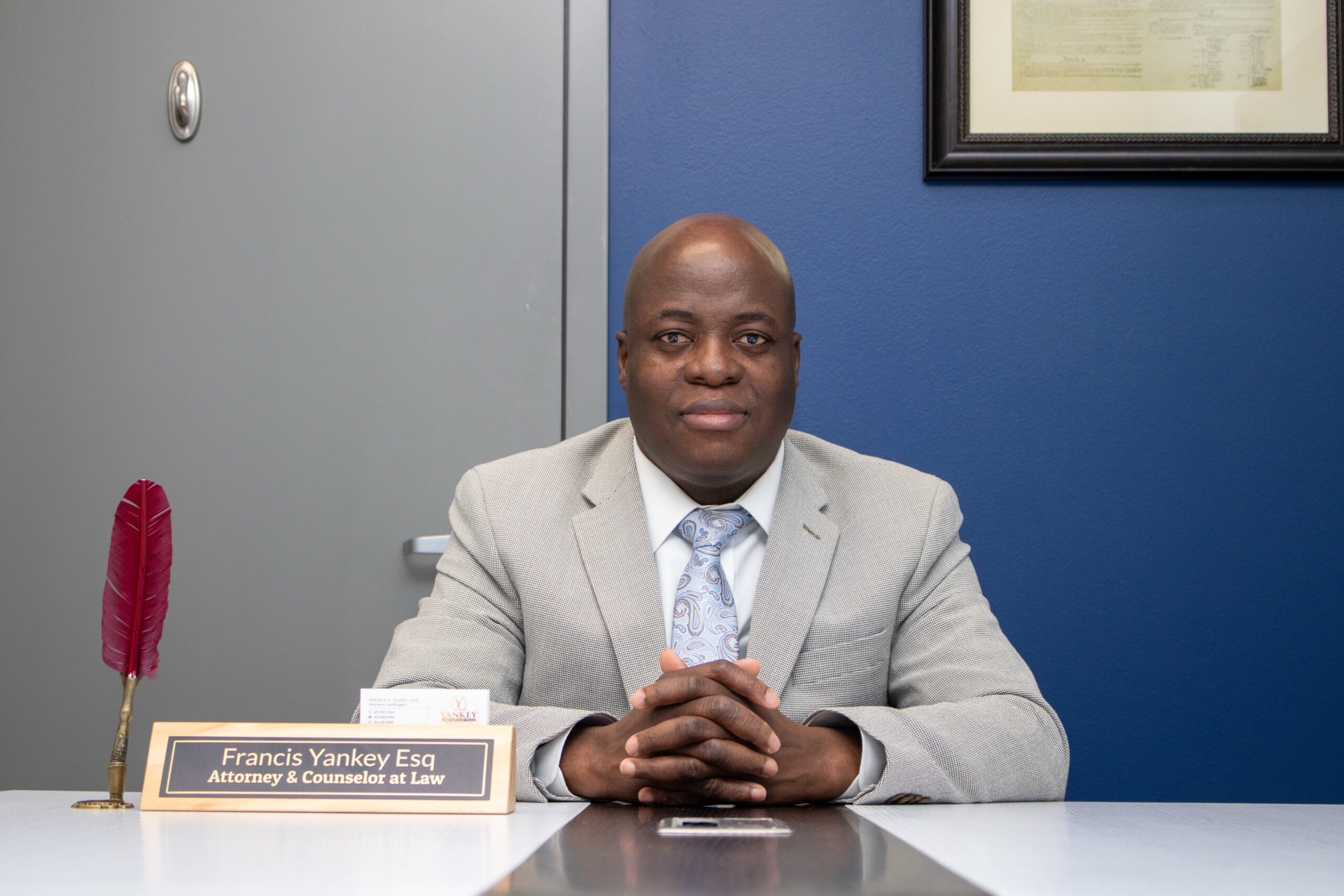
At Yankey Law Group, PLLC, Nashville-based immigration attorney Francis Yankey, Esq., assists clients with O and P visa applications, providing reliable support.
As of October 2025, USCIS reports average processing times of 2-3 months for O-1 petitions, with premium processing available for expedited review.
Disclaimer: This information is for informational purposes only and does not constitute legal advice. Immigration laws change; consult a qualified attorney for your situation as of October 2025.
O visas are designed for individuals with extraordinary ability or achievement (O-1) and their essential support personnel (O-2).
While P visas cover athletes and entertainment groups (P-1), reciprocal exchange visitors (P-2), and culturally unique performers (P-3).
Governed by the Immigration and Nationality Act (INA), these visas have no annual cap and allow temporary stays with extensions. O-1 visas permit dual intent, potentially leading to green card paths like EB-1, while P visas focus on specific performance or exchange activities.
The O-1 visa is divided into two categories: O-1A for extraordinary ability in sciences, education, business, or athletics, and O-1B for arts, motion pictures, or television. Applicants must demonstrate sustained national or international acclaim by meeting at least 3 of 10 (O-1A) or 6 (O-1B) criteria. O-2 visas are for essential support personnel, requiring proof of an integral role.
Category | Key Eligibility Requirements |
O-1A | Extraordinary ability in sciences/education/business/athletics; 3/10 criteria (e.g., awards, published material); see 8 CFR 214.2(o). |
O-1B | Distinction in arts/film/TV; 3/6 criteria (e.g., lead roles, critical reviews); see 8 CFR 214.2(o). |
O-2 | Essential to O-1 performance; prior collaboration; no separate work authorization. |
Special cases include mandatory peer consultations for certain fields, and O-3 status for dependents (spouses/children under 21).
The P-1 visa applies to athletes and entertainment groups with international recognition. P-1A is for individual athletes or teams, requiring a sustained reputation, while P-1B is for entertainment groups, mandating 75% of members have at least 1 year of group tenure.
Subcategory | Key Eligibility Requirements |
P-1A | Individual/team at international level; evidence of recognition (e.g., rankings, media coverage); see 8 CFR 214.2(p). |
P-1B | Group with international acclaim; 75% member continuity; see 8 CFR 214.2(p). |
Special cases include eligibility for coaches under the COMPETE Act and multiple employer petitions via agents.
The P-2 visa is for artists or performers participating in reciprocal exchange programs between U.S. and foreign organizations, such as those approved by the American Federation of Musicians or Actors’ Equity Association.
Eligibility requires participation in an approved program, international recognition, and a detailed itinerary demonstrating the exchange nature.
Criterion | Details |
Program Approval | Must be part of a formal reciprocal exchange agreement. |
Recognition | Evidence of international acclaim or skill parity. |
Itinerary | Detailed schedule of events and exchanges. |
The P-3 visa is for artists or entertainers who perform or teach culturally unique programs, such as traditional folk arts or rituals. Eligibility requires proof that the performance is unique to a specific culture and serves an educational or cultural purpose, supported by expert affidavits.
Criterion | Details |
Cultural Uniqueness | Performance tied to a specific cultural tradition. |
Purpose | Educational or cultural presentation. |
Evidence | Affidavits from cultural experts, event descriptions. |
Common documentation includes the Form I-129 petition, a detailed itinerary, and consultation letters from labor organizations or peers (required for most O/P visas). O-specific evidence includes 3+ criteria (e.g., awards, memberships), while P-specific evidence covers recognition (e.g., press clippings, contracts), group continuity (P-1), or cultural uniqueness (P-3).
Document Type | Core Documents | O Specific | P Specific |
Examples | I-129, itinerary, consultation letters | Awards, published articles | Press reviews, group contracts, cultural affidavits |
Navigating the O and P visa processes involves complex regulations and strict requirements, making professional guidance essential.
We strongly advise against attempting this process alone, particularly with consular interviews and extensions.
Yankey Law Group can assist clients—whether individuals with extraordinary ability, athletes, artists, or culturally unique performers—through the visa application process with dedication, ensuring compliance and stability for your extraordinary achievement or performance plans.
Yankey Law Group
The process involves:
Processing times average 2-3 months with USCIS (premium: 15 days), with consular processing varying by location.
O-3 and P-4 status is available for spouses and children under 21, regardless of nationality. They receive the same duration as the principal but are not authorized to work unless they obtain an Employment Authorization Document (EAD) through Form I-765 in specific cases. Dependents may study without requiring F-1 status.
Common issues include insufficient evidence of extraordinary ability or recognition, missing advisory opinions, or inadequate itineraries. Denials may occur under INA Section 214(b) due to presumed immigrant intent, with Requests for Evidence (RFEs) being frequent. To avoid, secure strong consultation letters and detailed documentation; consider premium processing for timely resolution.
3/10 (O-1A) or 3/6 (O-1B) evidentiary criteria (e.g., awards, reviews).
1 year initially (5 years for athletes), extendable to 10 years.
Yes, for most O/P visas from labor/peer groups.
Not unless EAD is obtained in specific cases.
File I-129 with updated itinerary before expiration.
Reapply with stronger evidence or explore alternatives.
Must tie to a specific tradition with expert support.
O-1 may transition to EB-1; P visas typically do not.
Navigating the O and P visa processes involves complex regulations and strict requirements, making professional guidance essential.
We strongly advise against attempting this process alone, particularly with consular interviews and extensions.
Yankey Law Group can assist clients—whether individuals with extraordinary ability, athletes, artists, or culturally unique performers—through the visa application process with dedication, ensuring compliance and stability for your extraordinary achievement or performance plans.
Yankey Law Group