Specialty worker visas, including H-1B for specialty occupations and H-3 for trainees, provide nonimmigrant options for temporary U.S. work or training.
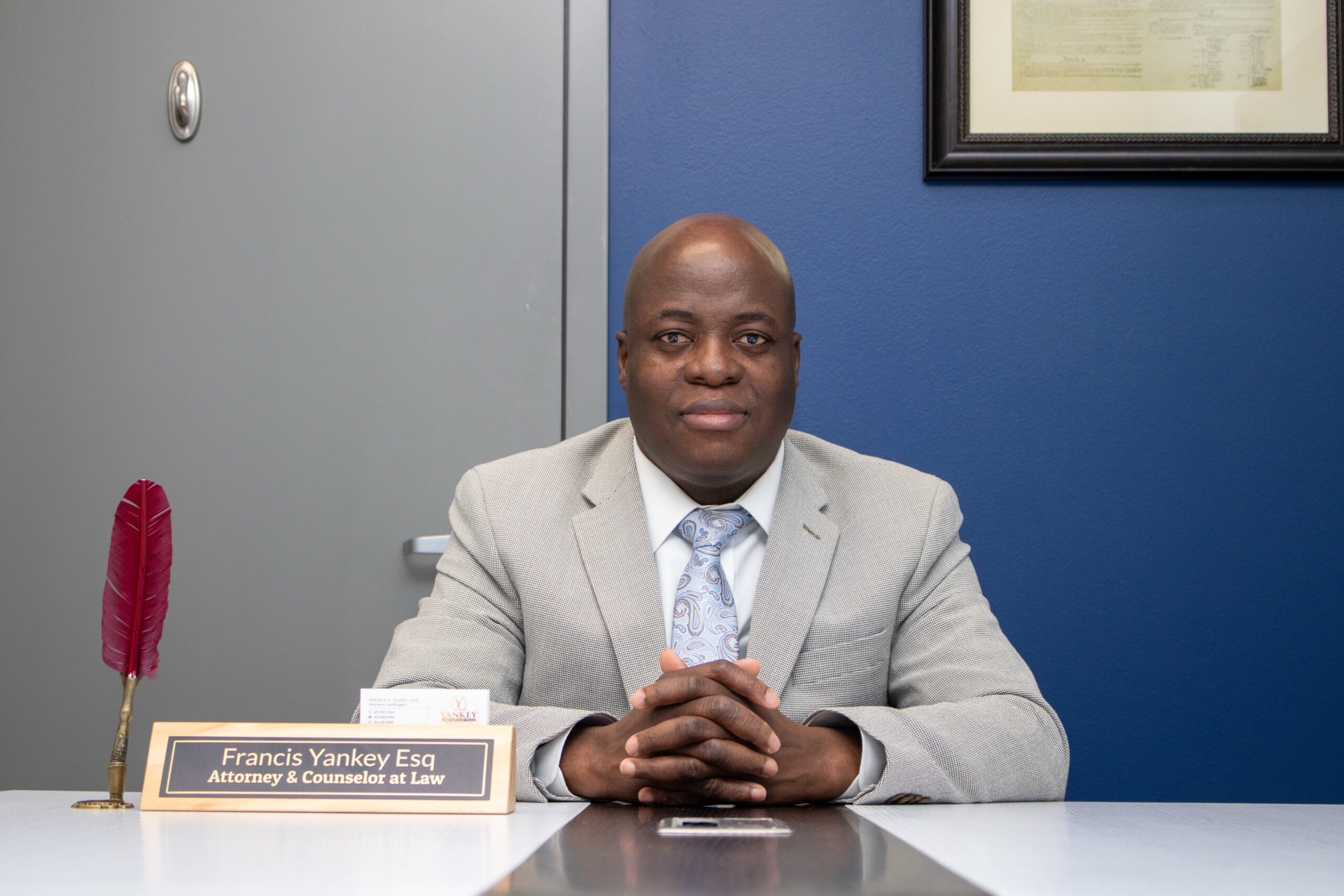
At Yankey Law Group, PLLC, Nashville-based immigration attorney Francis Yankey, Esq., assists clients with H-1B and H-3 applications, providing reliable support.
For FY 2026, USCIS received enough petitions to reach the 65,000 regular cap by July 2025, with electronic registrations showing a decrease from prior years. Approved petitions became effective October 1, 2025.
Disclaimer: This information is for informational purposes only and does not constitute legal advice. Immigration laws change; consult a qualified attorney for your situation as of October 2025. For personalized assistance, contact Attorney Francis Yankey at 615-530-5360 for a confidential consultation.
The H-1B visa is for professionals in specialty occupations requiring theoretical and practical application of specialized knowledge, such as in IT, engineering, or healthcare.
The H-3 visa is for trainees to receive training unavailable in their home country or for special education exchange visitors focused on children with disabilities.
Both are governed by the Immigration and Nationality Act (INA). H-1B visas are subject to an annual cap of 65,000 regular plus 20,000 for U.S. advanced degree holders, while H-3 special education visas are limited to 50 annually.
These visas allow temporary stays but do not directly lead to permanent residency, though they may facilitate transitions to other categories.
The H-1B visa is employer-sponsored and open to nationals of any country. The position must qualify as a specialty occupation, typically requiring a bachelor’s degree or equivalent in a specific field.
Requirement | Details |
Specialty Occupation | Involves theoretical and practical application of specialized knowledge; common in fields like IT, engineering, and sciences; see 8 CFR 214.2(h)(4). |
Education/Experience | U.S. bachelor’s degree or foreign equivalent; 12 years of experience may substitute for a degree in some cases. |
Cap Exemption | Applies to certain nonprofits, universities, and research organizations; extensions for pending green card applications. |
Wage Requirements | Employer must pay the prevailing wage or actual wage, whichever is higher, as certified by the Department of Labor. |
Special cases include H-1B1 visas for nationals of Chile and Singapore, which are cap-exempt under free trade agreements.
The H-3 visa is sponsor-sponsored and open to nationals of any country. It has two categories: trainee for non-medical training and special education exchange for training in educating children with disabilities.
Category | Key Eligibility Requirements |
Trainee | Training program in any field except graduate medical education; unavailable in home country; maximum 2 years; no displacement of U.S. workers. |
Special Education Exchange | Training in education of children with physical/mental disabilities or chronic illnesses; maximum 18 months; limited to 50 visas per fiscal year. |
Training must not involve productive employment unless incidental and essential to the program, and applicants must intend to return to their home country.
Common documentation for both visas includes proof of eligibility, such as degrees or training program details, and sponsor information.
For H-1B, include the certified Labor Condition Application (LCA), educational credentials, and a detailed job description.
For H-3, submit a training program outline, evidence that similar training is unavailable abroad, and a statement confirming no displacement of U.S. workers.
Document Type | Core Documents | H-1B Specific | H-3 Specific |
Examples | Passport, resumes, sponsor letters | LCA certification, degree evaluations | Training itinerary, unavailability proof, non-displacement affidavit |
The application process varies by visa type.
Processing times: H-1B cap petitions can start October 1; H-3 averages 3-5 months.
Navigating the H-1B and H-3 visa processes involves complex regulations and strict requirements, making professional guidance essential.
We strongly advise against attempting this process alone, particularly with cap lotteries, consular interviews, and extensions.
Yankey Law Group can assist clients—whether specialty workers or trainees—through the visa application process with dedication, ensuring compliance and stability for your work or training plans.
Yankey Law Group
H-1B visas are initially granted for up to 3 years, extendable to 6 years total, with extensions beyond 6 years possible in certain cases (e.g., pending permanent residency applications).
H-3 trainee visas are limited to 2 years, and special education to 18 months, with no extensions beyond these limits.
Work authorization for H-1B is specific to the approved employment; H-3 permits training activities only, with incidental productive work allowed if necessary to the program. Portability for H-1B allows job changes after 180 days if a new petition is filed.
Dependents (spouses and children under 21) receive H-4 status. Certain H-4 spouses are eligible for employment authorization via Form I-765, particularly if the principal H-1B holder has an approved I-140 or is in extension beyond 6 years.
H-4 dependents receive the same duration as the principal but cannot work without authorization. For H-3, dependents also get H-4 status but with no work eligibility.
For H-1B, common issues include not being selected in the cap lottery, requests for evidence (RFEs) on specialty occupation proof, and wage violations. H-3 denials often stem from insufficient evidence of training unavailability or potential U.S. worker displacement.
Denials may occur under INA Section 214(b) for presumed immigrant intent. To avoid, ensure thorough LCA compliance for H-1B and detailed program descriptions for H-3; consider premium processing to address issues promptly.
Navigating the H-1B and H-3 visa processes involves complex regulations and strict requirements, making professional guidance essential.
We strongly advise against attempting this process alone, particularly with cap lotteries, consular interviews, and extensions.
Yankey Law Group can assist clients—whether specialty workers or trainees—through the visa application process with dedication, ensuring compliance and stability for your work or training plans.
Yankey Law Group